Airport Hotel Capsule Rooms: A Practical Guide to Mini Stays
Find the Right Airport Hotel Capsule Room for Your Layover
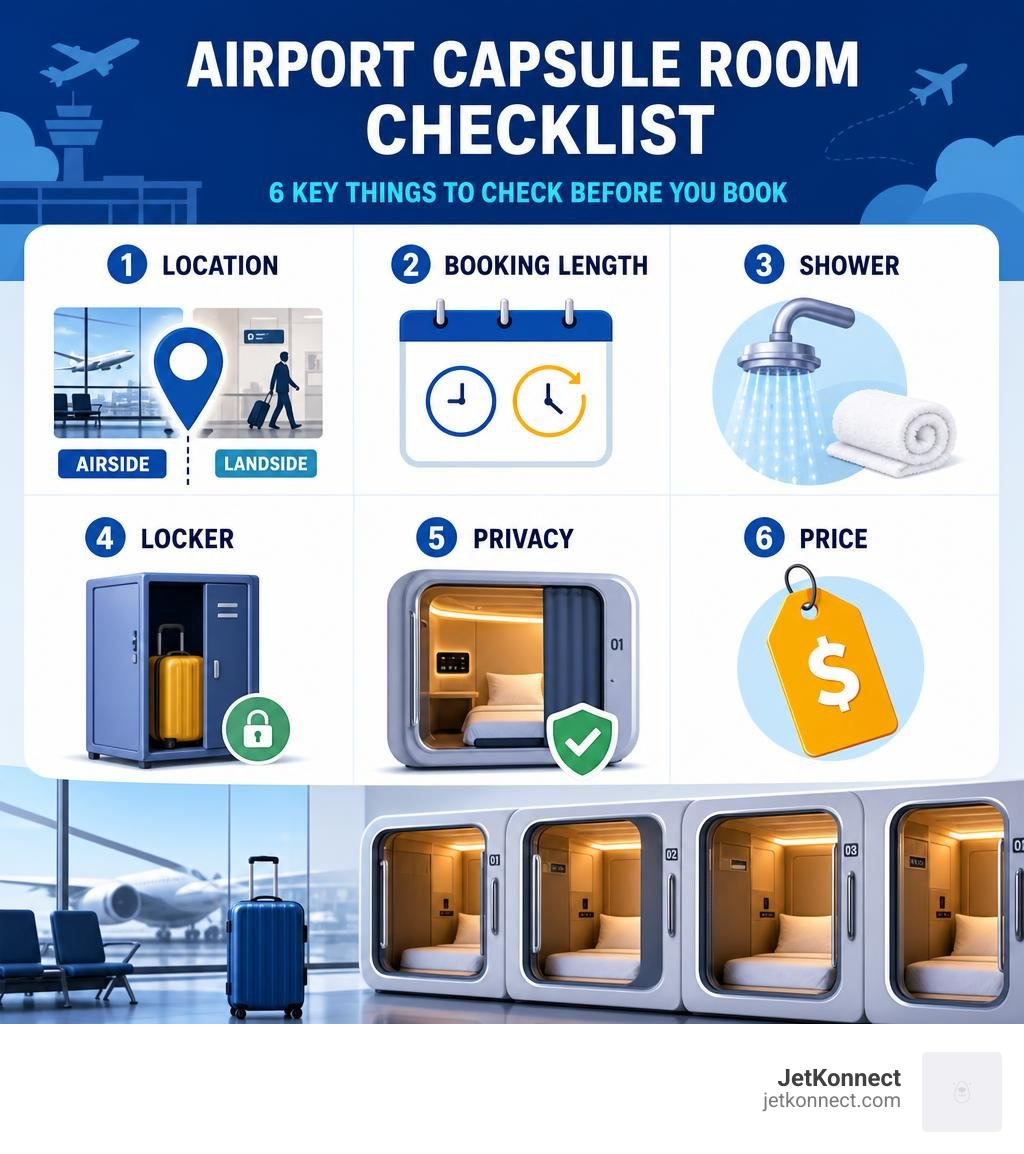
An airport hotel capsule room is a small private sleeping space designed for short layovers, early flights, and overnight transit. To find one, first check whether it is airside (after security) or landside (before security), then compare its hourly or overnight rate with a lounge pass and nearby hotel.
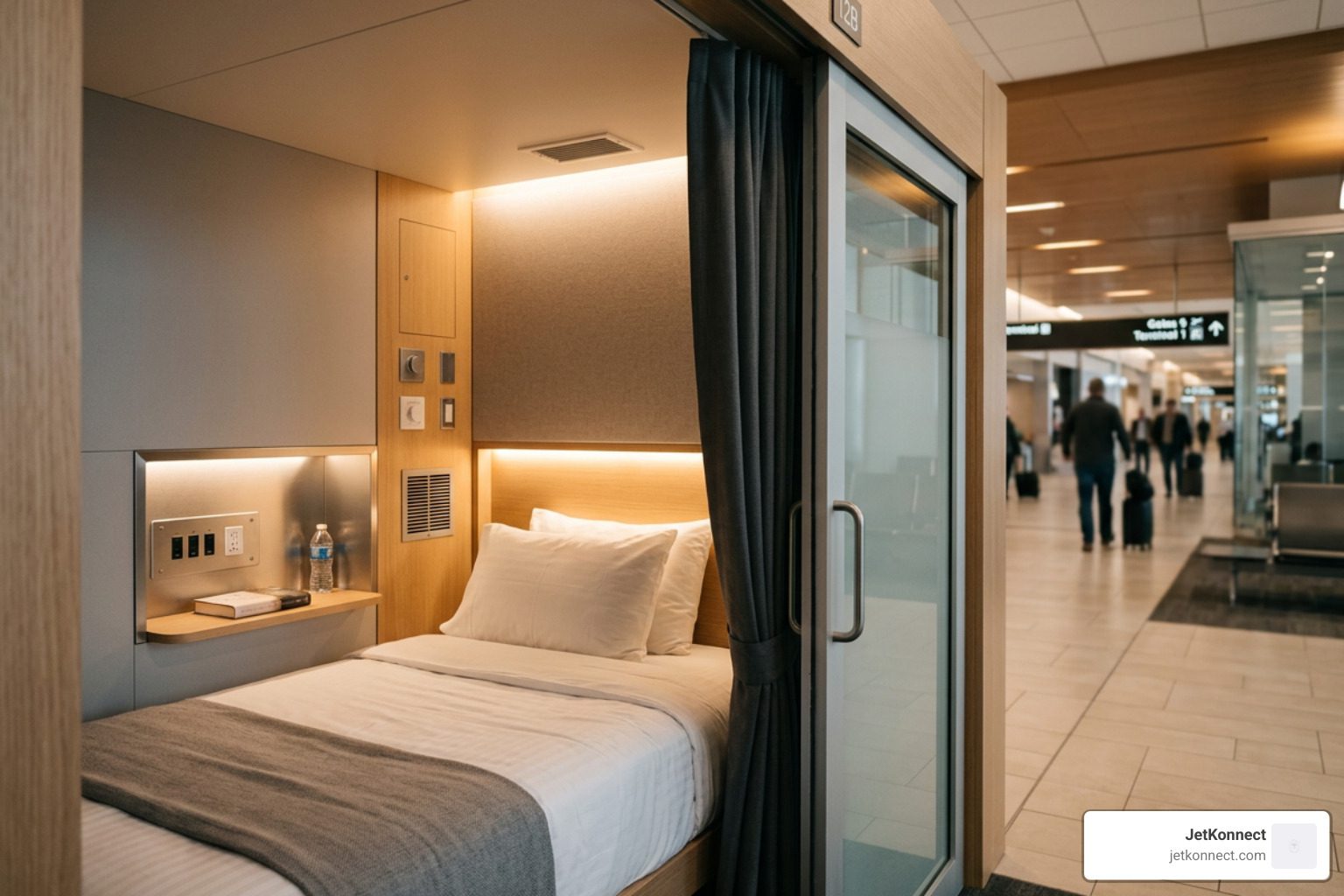
Capsule rooms usually give you a real bed, charging ports, Wi-Fi, lighting, ventilation, and a lockable space or nearby locker. Bathrooms are often shared, though some airport micro-hotels offer private en-suite cabins. They are usually best value for a 3- to 12-hour break when you need sleep and a shower without leaving the airport.
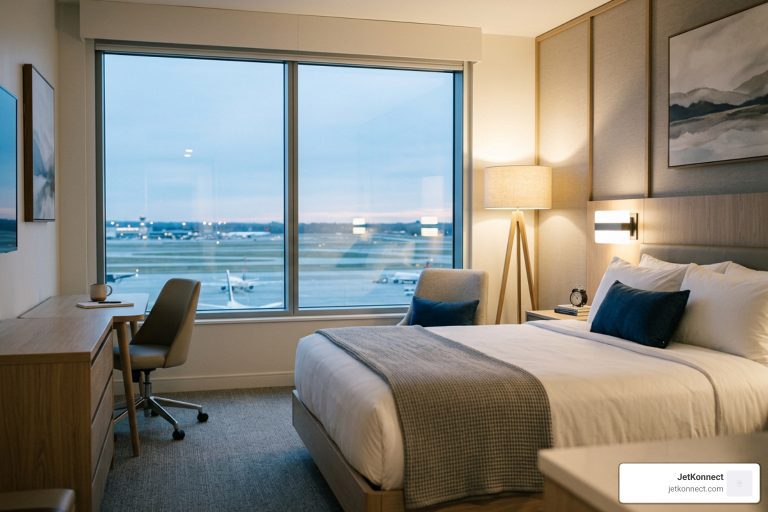
Unlike a traditional airport hotel, a capsule stay trades room size and full-service extras for location, speed, and flexible booking. Some properties operate 24/7 and sell stays in hourly blocks, while others require a minimum booking period.
I am Hank Cai, founder of JetKonnect. I use more than 18 years of travel-search and growth experience to make airport hotel capsule room options, lounges, and layover choices easier to compare before you travel.
Airport hotel capsule room glossary:
What to Expect Inside an Airport Hotel Capsule Room
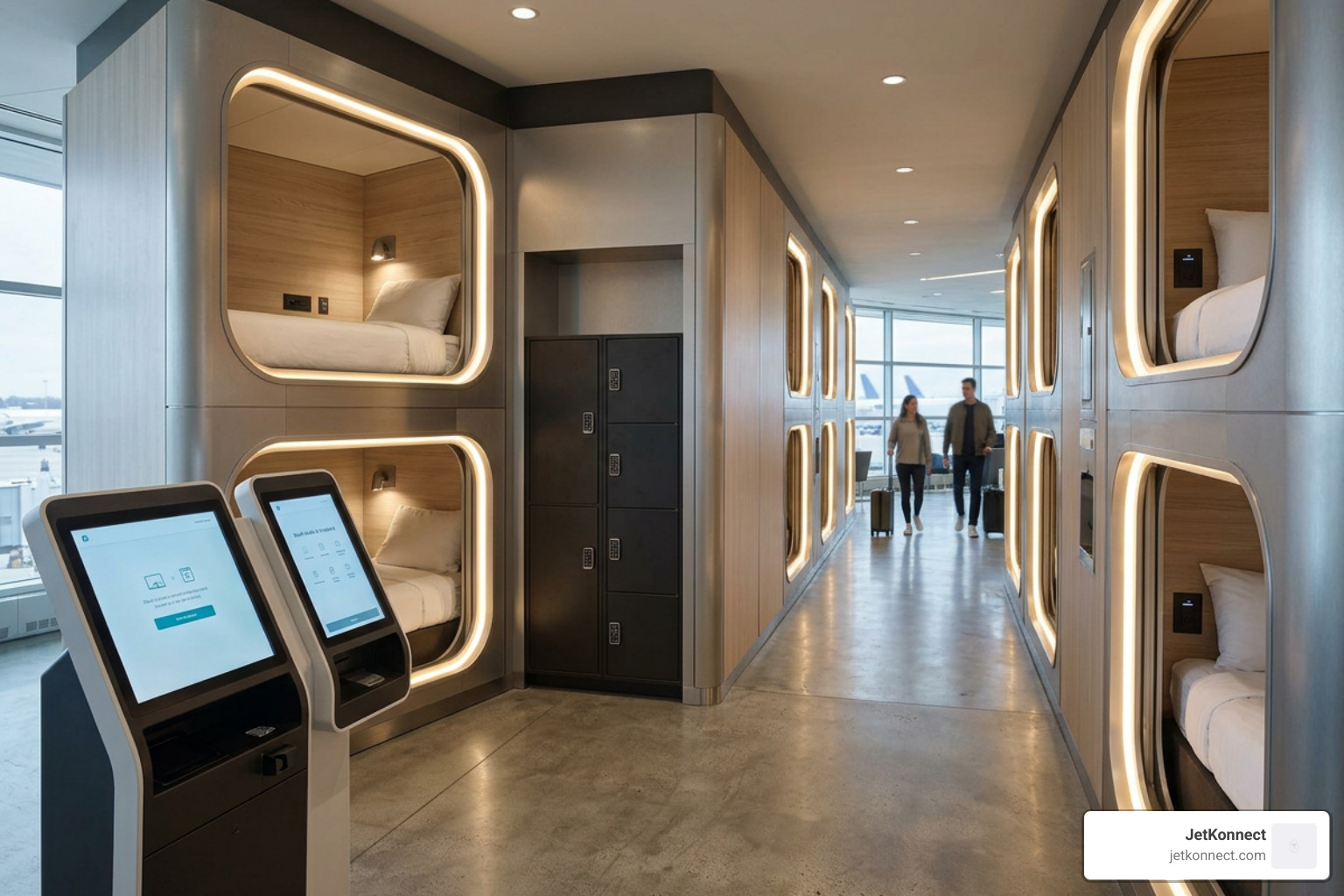
When you walk into a capsule facility inside an airport terminal, you are entering an environment optimized for rest and efficiency. Rather than walking down endless carpeted hallways toward a traditional 300-square-foot hotel room, you will encounter pod bays, compact micro-cabins, or stacked berths designed to maximize every inch of terminal real estate.
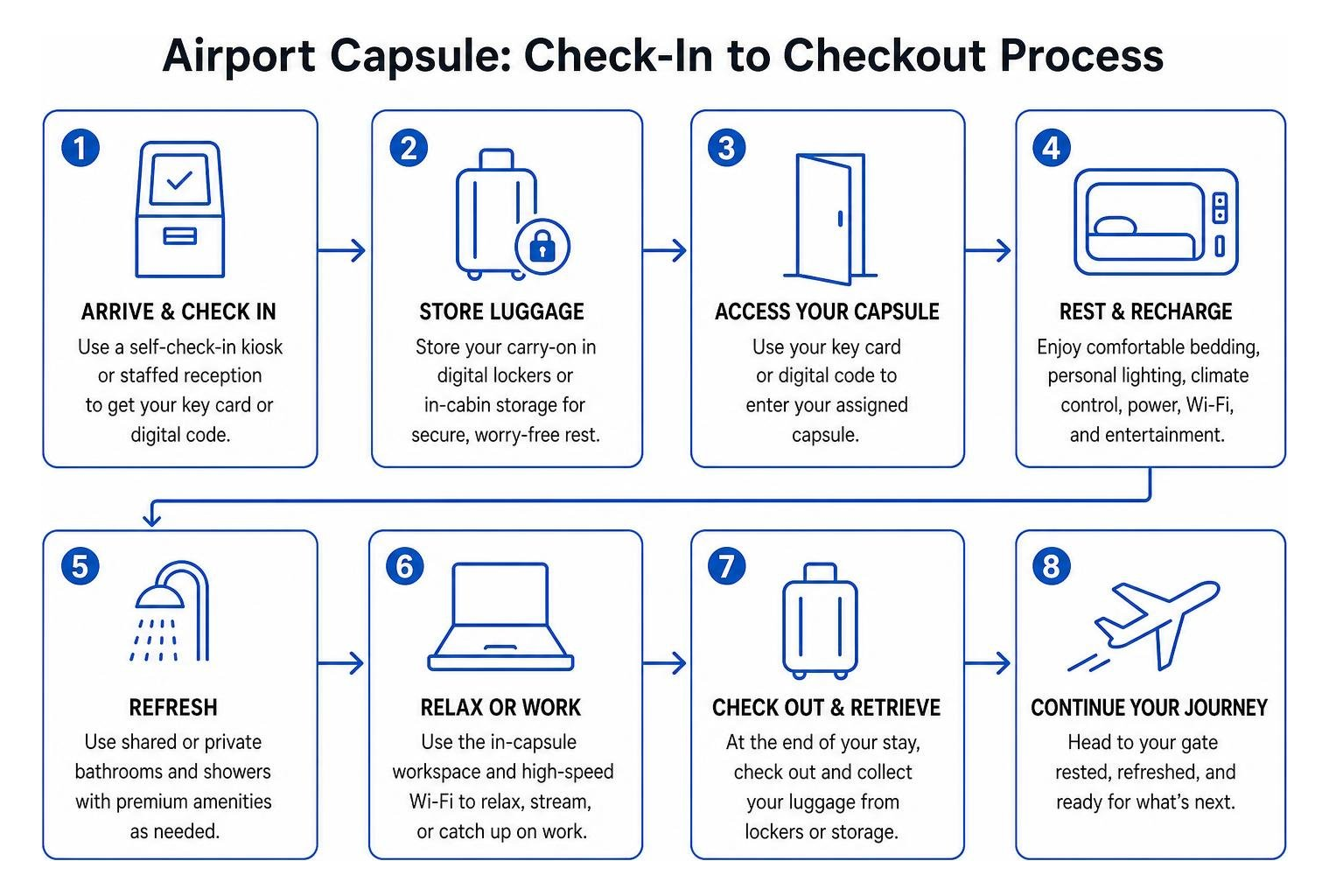
The atmosphere is quiet, climate-controlled, and designed around low-friction transit. Most facilities operate self-check-in kiosks or 24/7 staffed reception desks so you can grab a key card or digital code, secure your luggage, and slip into bed within minutes of landing.
Standard Amenities in an Airport Hotel Capsule Room
Despite their compact dimensions, modern capsule units are packed with thoughtful features designed to help you recharge:
- High-Quality Bedding: Many top-tier operators invest heavily in mattress quality. For example, Incheon’s DARAKHYU uses premium Simmons mattresses, while soundproof sleep pods like TUBE Sq at Chubu Centrair feature custom mattresses co-developed with FRANCEBED to ensure deep sleep during quick transits.
- Power and Connectivity: Capsules feature multi-standard electrical outlets, high-speed USB-A and USB-C ports, and complimentary high-speed Wi-Fi so your devices charge while you sleep.
- Lighting and Climate: You control personal dimmable LED lighting, reading lamps, and dedicated airflow or air-conditioning vents directly from an in-pod panel.
- Storage and Security: In-cabin laptop safes, under-bed compartments, or exterior digital lockers keep your carry-on luggage safe while you rest.
- Entertainment: Many modern cabins feature flat-screen Smart TVs equipped with streaming apps, fold-down workstations, and digital mirrors.
Shared Bathrooms, Showers, and Dedicated Privacy Zones
A common question travelers ask is how personal hygiene and privacy are handled. Airport capsule properties generally fall into two categories: true sleeping capsules with shared luxury amenities, or micro-hotel cabins with private en-suite facilities.
In properties with shared amenities, the bathroom areas rival upscale fitness clubs. Guests receive amenity kits containing toothbrushes, towels, slippers, eye masks, and earplugs. Shower suites feature powerful rainshower fixtures and complimentary premium toiletries. Some properties, like Capsule Hotel Near Copenhagen Airport — Sleep, Recharge, Go | Hotel Capsule Inn, emphasize Scandinavian design and wellbeing with private airflow and rain showers just minutes from terminal gates.
Privacy and inclusivity are central to modern capsule layouts:
- Gender-Specific Zones: Operators like CapsuleTransit, Kepler Club, and TUBE Sq provide dedicated female-only dorm sections and bathrooms with keycard-restricted access.
- Accessible Pods: Properties such as Capsule Hotel Zurich Airport provide barrier-free, lower-tier accessible capsules with wide doors and ground-floor bathrooms for travelers with reduced mobility.
- Round-the-Clock Security: Facilities utilize RFID keycards, digital door locks, continuous CCTV monitoring in public hallways, and strict quiet policies to maintain a safe, restful environment.
Comparing Airport Capsule Hotels, Lounges, and Transit Hotels
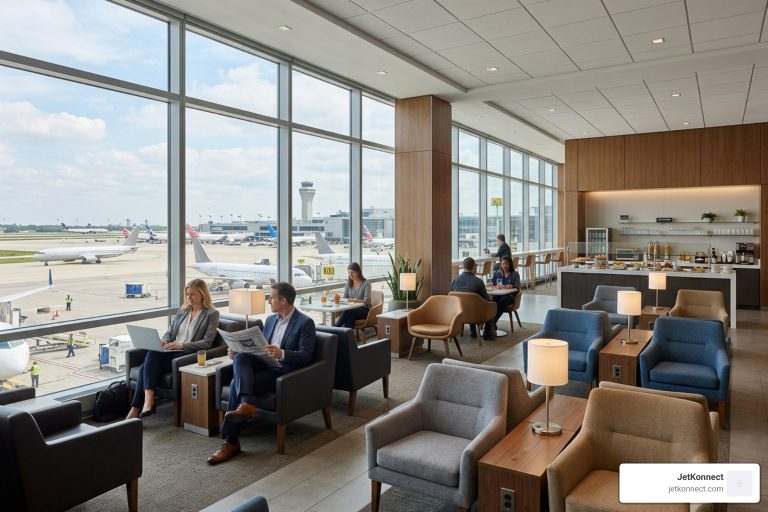
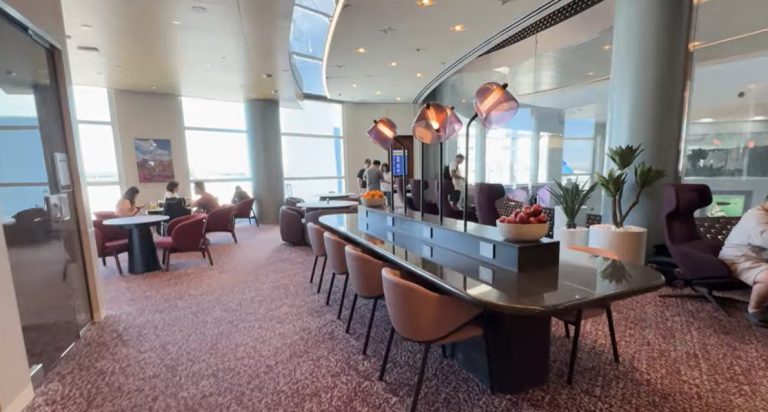
When planning a layover, choosing between an airport capsule room, an airline lounge, or a full-service transit hotel depends on your layover duration, budget, and need for actual horizontal sleep. Understanding your options across different airports ensures you don’t overpay for services you won’t use. If a premium travel card already gets you into a lounge for free, compare that route first in our Best Card for Lounge Access guide before paying out of pocket for a capsule stay.
| Feature | Airport Capsule Room | Airport Airline Lounge | Traditional Transit Hotel |
|---|---|---|---|
| Typical Stay Duration | 2 to 12 hours | 2 to 4 hours | 8 to 24 hours |
| Sleep Quality | High (fully private bed, dark, quiet) | Low to Moderate (recliners, ambient noise) | High (full private hotel room) |
| Pricing Model | Hourly blocks or flexible day-use | Fixed entry fee or membership | Fixed overnight day/night rate |
| Average Cost | $30–$50/hr or $50–$120/stay | $40–$75 per entry | $180–$350+ per night |
| Private Bathroom | Shared or En-suite (brand dependent) | Shared shower suites | Private En-suite |
| Food & Beverage | Basic (tea/coffee stations, vending) | Comprehensive (buffets, open bar) | Full room service & restaurants |
| Best For | Deep sleep, quick showers on layovers | Quick snacks, drinks, light work | Long overnight stays, family travel |
Booking an Airport Hotel Capsule Room by the Hour vs Overnight
One of the greatest advantages of a capsule stay is flexible pricing. Traditional hotels charge a flat rate for a 24-hour cycle regardless of whether you stay for twelve hours or three. Capsule hotels use tiered hourly pricing blocks (typically 3, 6, 9, 12, or 24 hours) to match airline scheduling.
For travelers figuring out what to do when your red eye lands hours before hotel check in, an hourly capsule reservation provides a bed, hot shower, and luggage security without paying for an unwanted extra night in the city center.
Pricing structures vary across global hubs:
- At TUBE Sq (Chubu Centrair), 3-hour stays start around JPY 2,800 (~$19 USD), scaling up to JPY 5,300 (~$36 USD) for a full 24 hours, with standalone shower plans available for JPY 900.
- At Kuala Lumpur International Airport, CapsuleTransit | Airport Transit Hotel in KLIA1 and KLIA2 provides flexible blocks starting at RM112.50 for 3 hours up to RM275 for 24 hours.
- Kepler Club at KLIA offers hourly pricing at roughly AU$14 per hour, with a capped pricing rule where any stay between 10 and 24 hours maxes out at AU$140.
Airside vs Landside Capsule Locations
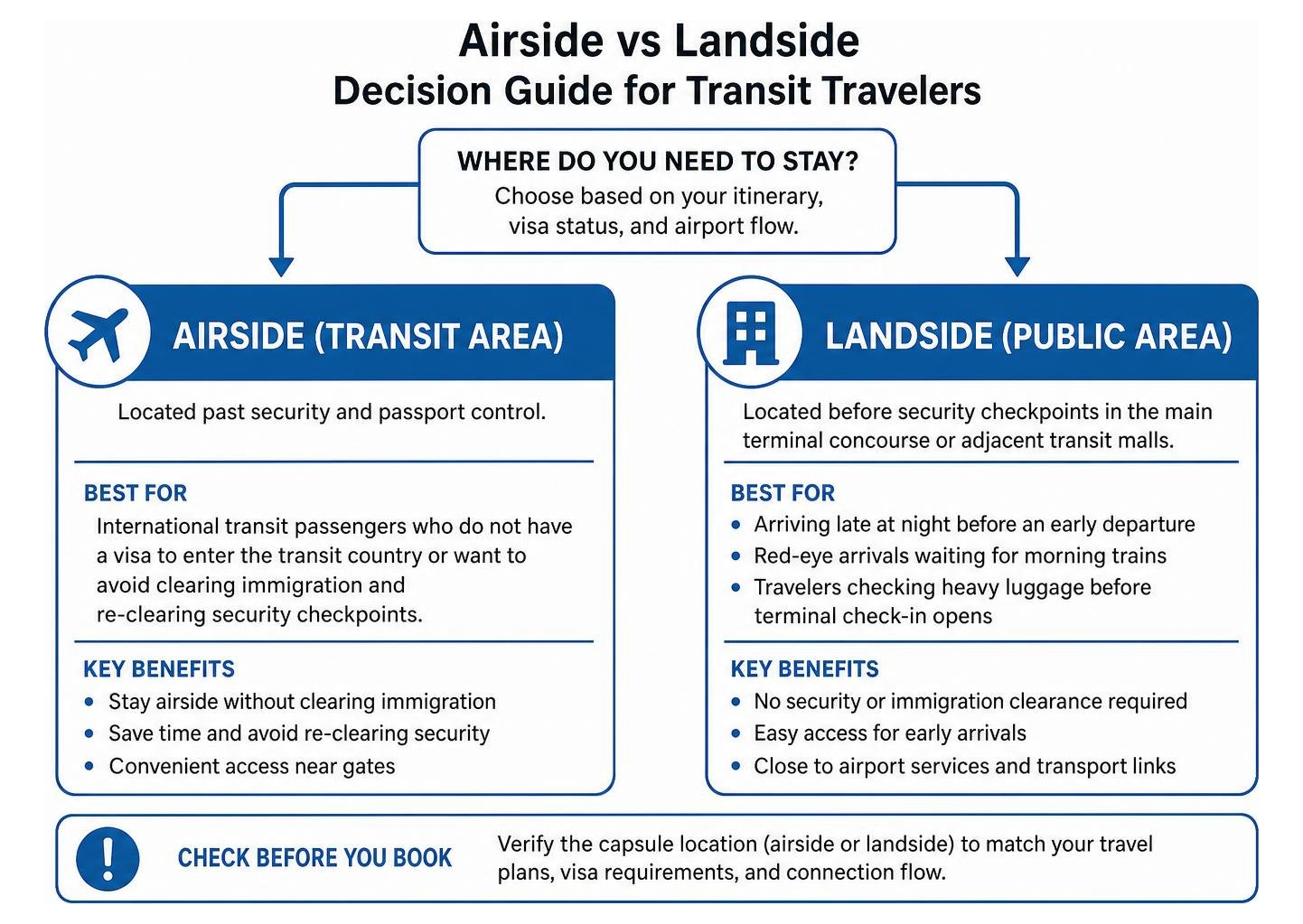
Before reserving a pod, verify which side of airport security the facility sits on:
- Airside (Transit Area): Located past security and passport control. These are ideal for international transit passengers who do not possess a visa to enter the transit country or want to avoid clearing immigration and re-clearing security checkpoints.
- Landside (Public Area): Located before security checkpoints in the main terminal concourse or adjacent transit malls. These are best suited for travelers arriving late at night before an early morning departure, red-eye arrivals waiting for morning trains, or travelers checking heavy luggage before terminal check-in opens.
Operators like CapsuleTransit | Airport Transit Hotel in KLIA1 and KLIA2 manage over 350 beds across 4 properties in KLIA, placing options both landside and airside. Similarly, properties offering flexible airside cabins like YOTELAIR London Gatwick (South Terminal) give travelers 24/7 check-in flexibility right beside the gates.
Leading Airport Capsule Pods and Layover Hubs Worldwide
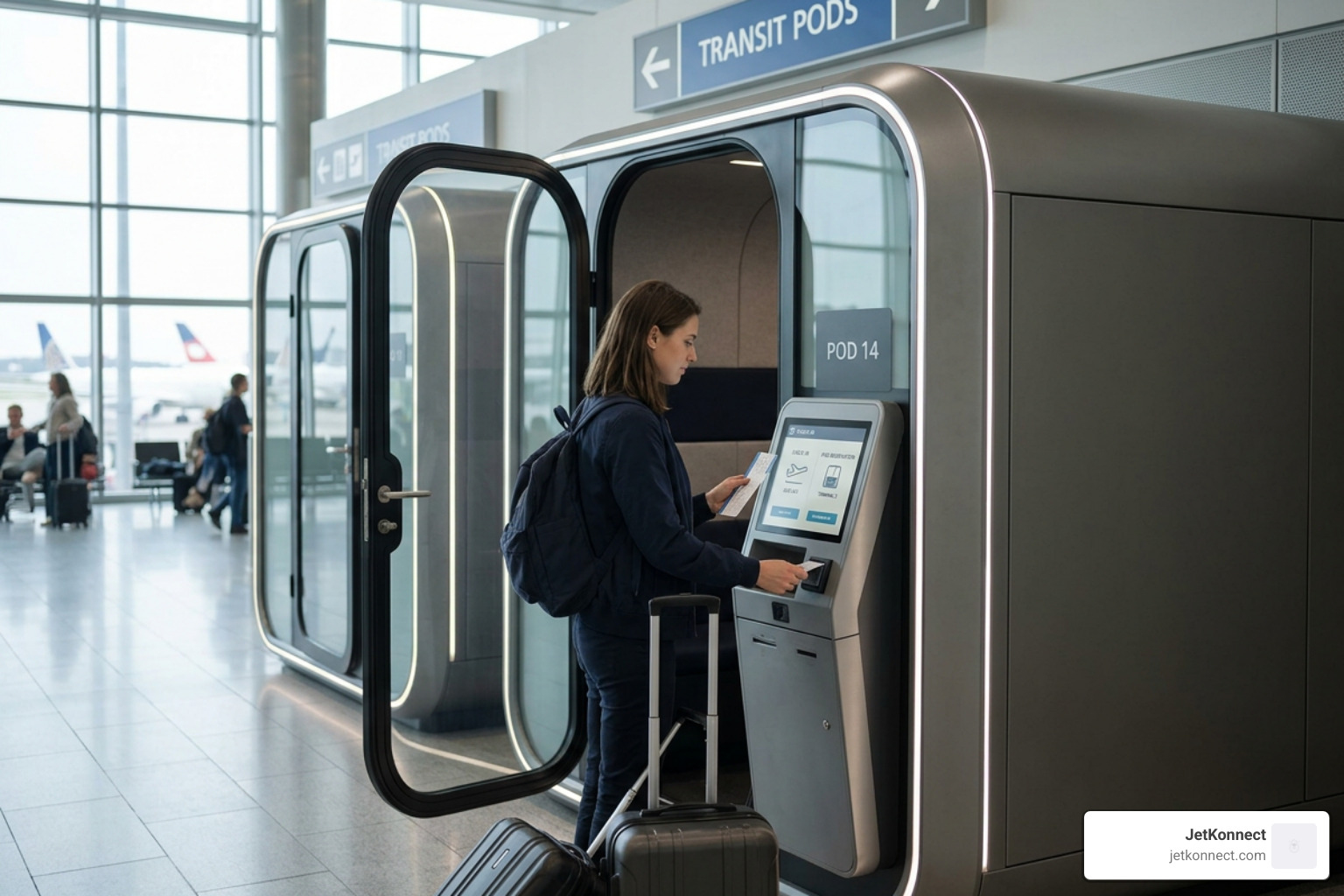
Airport sleeping pods and micro-rooms are standard features at major international hubs. Whether you are consulting our curated guides or navigating a quick connection, knowing where to find quality micro-stays makes layovers far more comfortable.
Top Global Terminals Offering Micro-Stay Pods
Here is how several premier airport capsule operators compare around the world:
1. Incheon International Airport (ICN) – DARAKHYU
Located in Terminals 1 and 2, DARAKHYU was Korea’s first airport capsule hotel. Inspired by traditional Korean architectural aesthetics, it features smart IoT controls, keyless smartphone entry, Simmons bedding, and sound insulation certified down to an ultra-quiet library level of 40 dB. Guests can book rooms by the hour with or without en-suite private showers.
2. London Gatwick Airport (LGW) – YOTELAIR
Situated in Gatwick’s South Terminal (landside, adjacent to the train station), YOTELAIR features compact cabins inspired by luxury aircraft design. Cabins range from Standard Singles to Premium Queens, each equipped with converting SmartBeds, monsoon rainshowers, fold-out work desks, and a 4-hour minimum booking option.
3. Chubu Centrair International Airport (NGO) – TUBE Sq
TUBE Sq operates 138 high-spec capsules (84 for men, 54 for women) directly inside the passenger terminal. Featuring 24/7 self-check-in, customized ergonomic bedding, separate gender zones, and dedicated shower packages, it provides a quiet escape for domestic and international travelers transiting through Nagoya.
4. Zurich Airport (ZRH) – Capsule Hotel Zurich Airport
Positioned directly across from Check-In 1, this Swiss micro-stay hub combines private capsules with co-working desks, meeting rooms, a wellness fitness area, and a bar. It features single capsules, dedicated female-only dormitories, and barrier-free accessible cabins with extra-long mattresses over 2 meters in length.
5. Singapore Changi Airport (SIN) – Snooze Lounges & Airside Pods
Changi Airport features dedicated free snooze lounges across its terminals with ergonomic contoured recliners for quick naps, alongside airside transit hotels and pay-per-use sleeping pods equipped with charging sockets and reading lamps.
Frequently Asked Questions About Airport Capsule Hotels
Are airport capsule rooms quiet enough for deep sleep?
Yes. Dedicated capsule hotels utilize commercial sound-insulation panels, sound-masking technology, and structural acoustic dampening. For instance, DARAKHYU maintains an interior noise level around 40 dB (comparable to a quiet library). In addition, capsule hotels enforce strict noise policies: no phone calls are permitted inside sleeping bays, alarms must be set to vibrate or used with headphones, and reception desks provide complimentary high-density foam earplugs upon check-in.
Can two people share a single airport capsule room?
Standard sleeping capsules at brands like TUBE Sq or basic sleep pods are strictly single-occupancy due to local safety and fire regulations. However, many airport micro-hotels offer larger private units designed for couples or small families. For example, CapsuleTransit offers Queen and Private Suites, while YOTELAIR provides Premium Twin and Queen cabins that comfortably accommodate two adults.
Can you access an airport capsule hotel using lounge memberships?
Yes, certain capsule providers partner with airport lounge networks:
- Minute Suites (USA): Members of Priority Pass and DragonPass receive a complimentary 1-hour stay per visit (with up to 3 guests), with discounted 15-minute increments thereafter ($40/hour).
- Sleep Oasis (Bogotá BOG): Priority Pass cardholders can redeem a standard lounge visit for a 2-hour stay in a private, air-conditioned sleep pod featuring tablet entertainment and luggage storage.
- Sleep Lounges (KLIA): Selected airline programs and lounge networks allow travelers to redeem lounge passes for 3-hour single-bed sleep blocks, complete with amenity kits and shower access.
What’s the difference between airside and landside capsule hotels?
Airside capsule hotels sit past security and passport control, which suits international transit passengers who want to avoid clearing immigration or re-clearing security. Landside capsule hotels sit before the checkpoint in the main terminal or an adjacent transit mall, which suits travelers arriving late at night before an early departure or checking heavy luggage before terminal check-in opens.
How much does an airport capsule room typically cost?
Airport capsule rooms typically run $30 to $50 per hour or $50 to $120 for a full stay, compared to $40 to $75 for a single lounge entry or $180 to $350-plus for a traditional overnight transit hotel room. Exact pricing depends on the operator, the airport, and whether the pod includes an en-suite shower.
Rest Smarter on Your Next Layover
Airport capsule rooms have transformed airport downtime from an uncomfortable wait at the gate into a private, restorative break. By offering flexible hourly bookings, quiet sleeping conditions, hot showers, and integrated security, micro-hotels deliver everything transit passengers need without the expense of a traditional resort.
Before your next long layover, verify whether an airside or landside property fits your flight schedule, check your lounge card entitlements for complimentary micro-stay hours, and consult our guide to the 10 best airport hotels for nearby stays to plan your travel day with confidence.
{ “@context”: “https://schema.org”, “@type”: “FAQPage”, “mainEntity”: [ { “@type”: “Question”, “name”: “Are airport capsule rooms quiet enough for deep sleep?”, “acceptedAnswer”: { “@type”: “Answer”, “text”: “Yes. Dedicated capsule hotels utilize commercial sound-insulation panels, sound-masking technology, and structural acoustic dampening. DARAKHYU at Incheon maintains an interior noise level around 40 dB, comparable to a quiet library. Capsule hotels also enforce strict noise policies and provide complimentary earplugs at check-in.” } }, { “@type”: “Question”, “name”: “Can two people share a single airport capsule room?”, “acceptedAnswer”: { “@type”: “Answer”, “text”: “Standard sleeping capsules at brands like TUBE Sq are strictly single-occupancy due to local safety and fire regulations. Many airport micro-hotels offer larger private units for couples instead: CapsuleTransit offers Queen and Private Suites, while YOTELAIR provides Premium Twin and Queen cabins that comfortably accommodate two adults.” } }, { “@type”: “Question”, “name”: “Can you access an airport capsule hotel using lounge memberships?”, “acceptedAnswer”: { “@type”: “Answer”, “text”: “Yes, in select cases. Minute Suites in the USA gives Priority Pass and DragonPass members a complimentary 1-hour stay per visit with up to 3 guests, then discounted 15-minute increments at $40 per hour. Sleep Oasis at Bogotá (BOG) lets Priority Pass cardholders redeem a standard lounge visit for a 2-hour private sleep pod stay.” } }, { “@type”: “Question”, “name”: “What’s the difference between airside and landside capsule hotels?”, “acceptedAnswer”: { “@type”: “Answer”, “text”: “Airside capsule hotels sit past security and passport control, which suits international transit passengers who want to avoid clearing immigration or re-clearing security. Landside capsule hotels sit before the checkpoint in the main terminal, which suits travelers arriving late at night before an early departure or checking heavy luggage before terminal check-in opens.” } }, { “@type”: “Question”, “name”: “How much does an airport capsule room typically cost?”, “acceptedAnswer”: { “@type”: “Answer”, “text”: “Airport capsule rooms typically run $30 to $50 per hour or $50 to $120 for a full stay, compared to $40 to $75 for a single lounge entry or $180 to $350-plus for a traditional overnight transit hotel room. Exact pricing depends on the operator, the airport, and whether the pod includes an en-suite shower.” } } ] }